

Žygimantas Vaičiūnas: Rebuilding Ukraine is an investment in the security and resilience of all of Europe
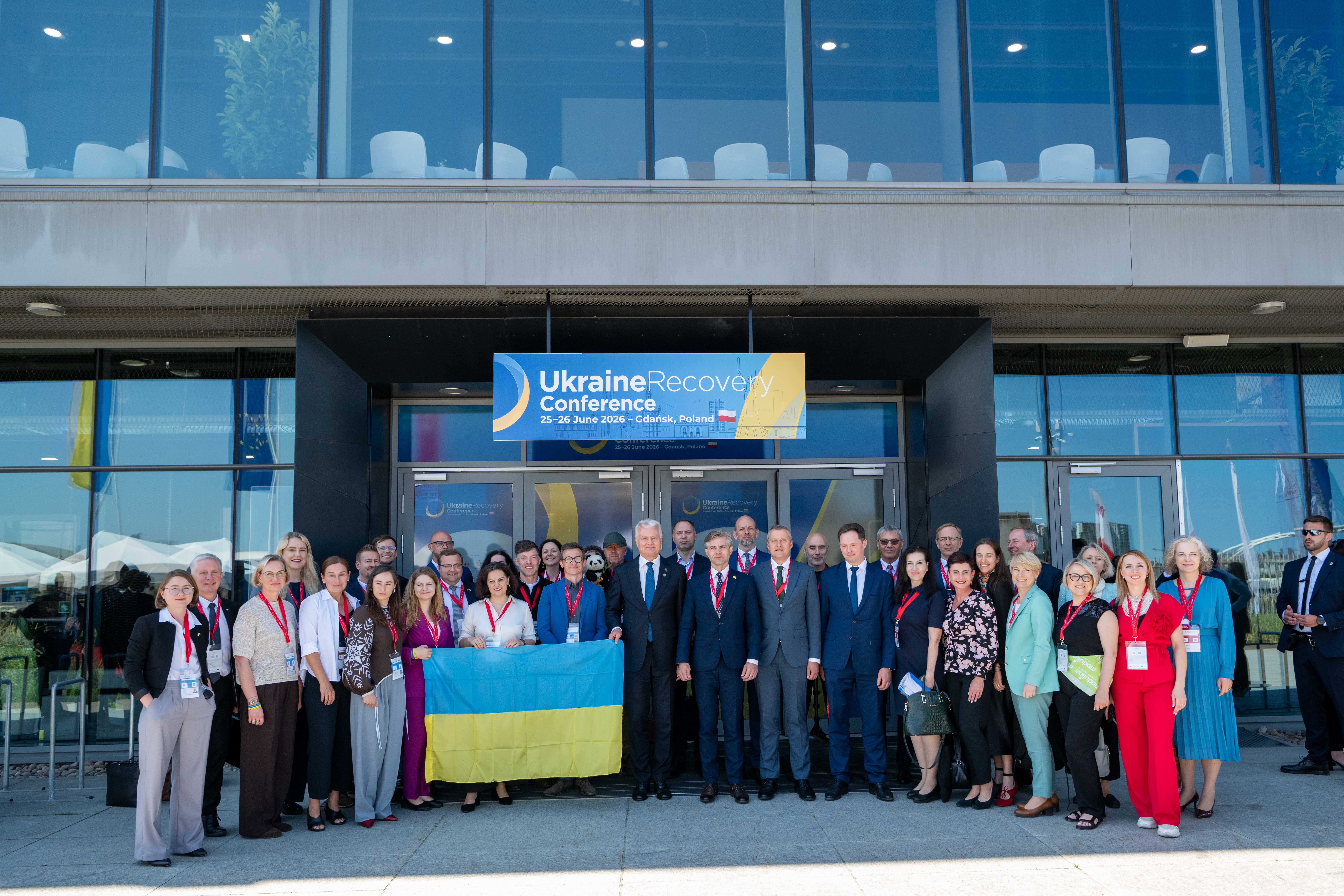
Ukrainos atkūrimo konferencijoje Gdanske. Foto R. Dačkaus
On 24–25 June, acting Minister of Energy Žygimantas Vaičiūnas took part in the Ukraine Recovery Conference (URC 2026) in Gdańsk, which focused on strengthening the resilience of Ukraine’s energy system and economy, supporting reconstruction efforts and promoting long-term investment.
‘For four years now, Ukraine has kept its energy system operating despite constant russian attacks – this has provided valuable lessons in energy resilience, decentralisation and cyber security for all of Europe. Rebuilding Ukraine is an essential investment in Europe’s security. Ukraine’s resilience is Europe’s resilience. And Ukraine’s success will be a success for us all,’ said Mr Vaičiūnas.
On the eve of the Ukraine Recovery Conference, a meeting of the G7+ Ukraine Energy Coordination Group was held, during which participants were briefed on the critical situation facing Ukraine’s energy sector. More than 65 percent of the country’s electricity generation capacity has been destroyed or damaged as a result of russia’s ongoing attacks, making the restoration of energy infrastructure one of Ukraine’s greatest challenges.
‘Since the very beginning of russia’s aggression, Lithuania has demonstrated its solidarity with Ukraine through concrete actions. Last winter, Lithuania supplied Ukraine with transformers and generators, as well as equipment that was no longer needed following the synchronisation with continental Europe and the dismantling of interconnections with russia and Belarus. To support decentralisation and strengthen resilience, Lithuania is implementing projects to install solar power plants together with energy storage systems at hospitals, schools and kindergartens across Ukraine,’ emphasised Mr Vaičiūnas.
During the visit, the energy ministers of Lithuania and Ukraine signed a joint declaration on strengthening cooperation to enhance energy resilience and support recovery. The declaration provides for the continuation of the ‘Support for Ukraine’s energy sector with solar power plants’ project through its second stage and significantly expanding the scope of the project to cover critical public infrastructure facilities across Ukraine.
Lithuania has already allocated EUR 4 million for the installation of solar power plants with energy storage systems at schools, kindergartens, hospitals and other public institutions in Ukraine. It will also continue to provide emergency assistance to help restore damaged energy infrastructure. The document envisages closer cooperation in strengthening energy resilience, promoting decentralised electricity generation and supporting Ukraine’s integration into the European energy system.
‘I am happy to see that the solar power and energy storage systems project that we initiated has proven successful. Not only has it entered its second stage, but it has also secured an additional EUR 3 million in funding from European Commission support programmes. This means that we can now not only continue the initiative but also significantly expand it to critical institutions across Ukraine, including schools, kindergartens and hospitals. It is a tangible contribution that saves lives, strengthens Ukraine’s energy resilience and ensures the continuity of essential services during times of crisis,’ said Mr Vaičiūnas.
The solar power and energy storage systems project initiated by Lithuania has also secured additional funding from other European Commission support programmes as a result of its success and rapid implementation. This will enable the project to be expanded further, strengthening Ukraine’s energy resilience.
Mr Vaičiūnas also took part in a high-level investment forum and a ministerial discussion on financing Ukraine’s reconstruction and ensuring its sustainable development. Investment opportunities in Ukraine’s energy sector were discussed, as was the importance of public–private cooperation in mobilising funding for the country’s reconstruction.
Bilateral energy cooperation between Lithuania and Ukraine is currently more active than ever before, driven not only by Lithuania’s support measures but also by the long-term supply of liquefied natural gas (LNG) to Ukraine through the FSRU Independence, which is part of the Klaipėda LNG terminal operated by Lithuania’s KN Energies. During the auction held in May–June, Ukraine’s Naftogaz committed to importing part of its LNG through Lithuania during the 2033–2044 period. At present (2025–2026), and likely over the next few years, Ukrainian companies are also expected to import part of their gas through the Klaipėda LNG terminal.