

Žygimantas Vaičiūnas in Luxembourg: Protection and resilience of critical energy infrastructure to be legally enshrined in the EU agenda
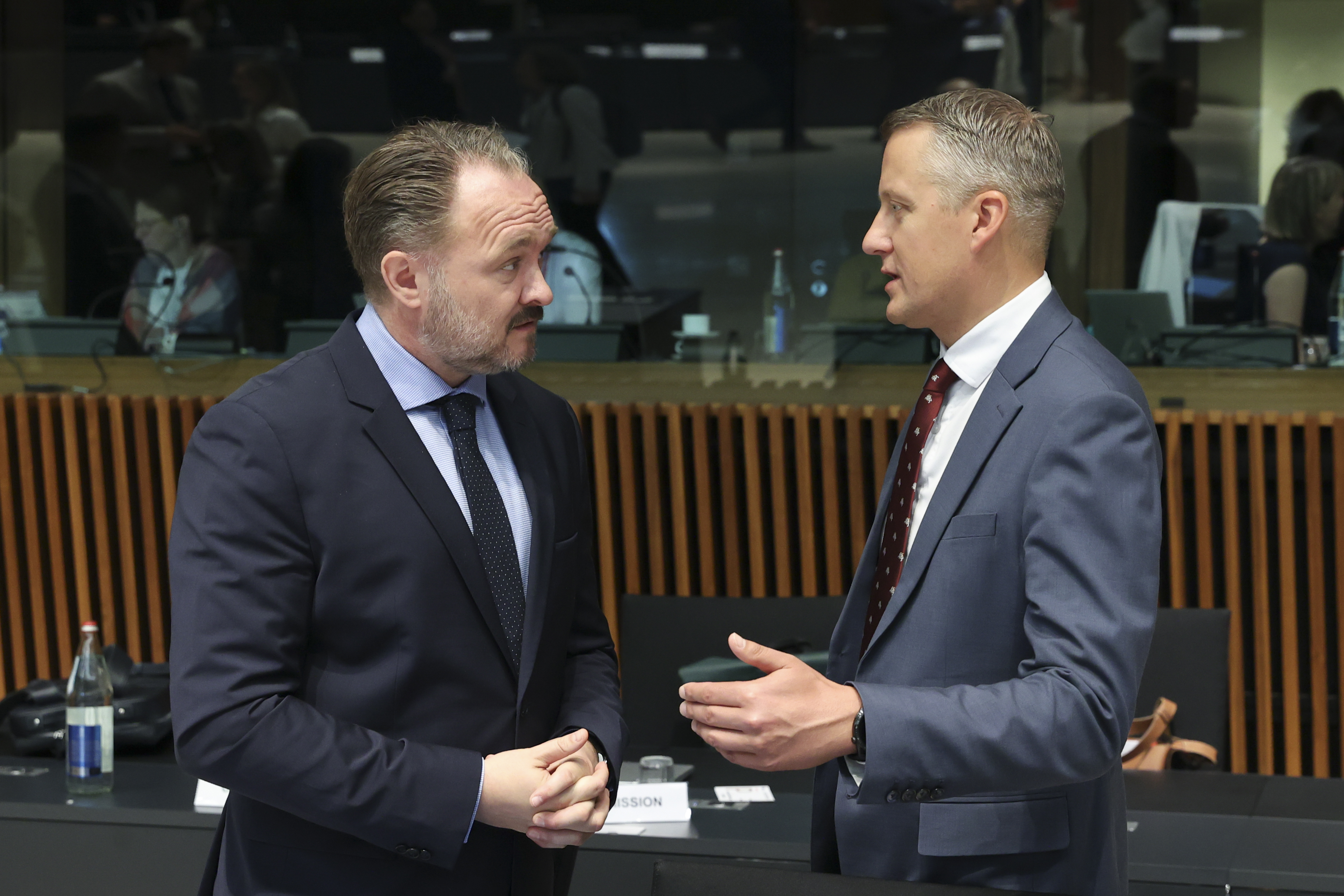
Žygimantas Vaičiūnas su Dan Jorgensen, Europos komisaru, atsakingu už energetiką ir būstą
At the 26 June meeting of the EU Transport, Telecommunications and Energy (TTE) Council in Luxembourg, EU energy ministers, including Lithuania’s acting Minister of Energy Žygimantas Vaičiūnas, reached a general approach on the European Grids Package, signed a tripartite agreement for energy storage and discussed post-2030 energy sector decarbonisation, as well as the impact of the crisis in the Middle East on the energy sector.
The European Grids Package: A legal framework with EU financial support for cross-border critical energy infrastructure
At the meeting, the TTE Council adopted its general approach to the European Grids Package, which consists of two legislative acts: the Trans-European Networks for Energy (TEN-E) Regulation and the Energy Infrastructure Permitting Directive.
The TEN-E Regulation is designed to improve the planning of cross-border critical energy infrastructure, accelerate permitting procedures for energy infrastructure projects and establish more effective cost- and benefit-sharing mechanisms for cross-border projects.
‘A year ago in the European Commission, critical energy infrastructure was not on the EU agenda or in its action plans. Thanks to active efforts by Lithuania and other like-minded Member States, the issue of protecting critical energy infrastructure has moved from aspiration to a potentially funded measure. In the text of the TEN-E Regulation approved today by the TTE Council, this issue will be one of the key priorities: a separate category has been included on the protection and resilience of critical energy infrastructure and the rapid restoration of damaged energy infrastructure. It is important for the EU to have effective legal and financial instruments that ensure practical implementation, both in protecting energy infrastructure and – in the case of damaged infrastructure – in enabling rapid response and restoration,’ said Mr Vaičiūnas at the meeting.
Tripartite agreement for energy storage
Alongside the Council meeting, a tripartite agreement was signed between the European Commission, Member States and renewable energy and energy-consuming industrial companies on boosting energy storage capacity. The agreement aims to deploy approximately 45 GW of new energy storage capacity in the EU by 2028, enhance the integration of renewable energy, reduce price volatility and strengthen grid flexibility. The agreement will also contribute to reducing gas demand, advancing the electrification of industry and improving competitiveness. Its implementation involves cooperation between Member States, businesses, the energy sector and financial institutions, with the aim of accelerating the transformation of the EU energy system.
Implications of the Methane Regulation for EU energy security and supply chains
Lithuania also joined a joint statement calling for a review of the implementation of the EU Methane Regulation. The requirements currently set out in the Regulation could have a significant impact on energy prices and pose risks to the security of energy supply. Ongoing geopolitical instability and constraints on global gas and oil supply chains continue to put pressure on energy markets. The implementation of the Regulation should therefore not restrict the EU’s ability to secure gas and oil supplies from a diverse range of sources. In order to ensure security of supply and avoid unwanted market disruptions, it is necessary to postpone the application of certain obligations or to provide for a transitional period during which penalties will not apply.
Decarbonisation after 2030: Climate, competitiveness and security – common strategic directions
In the discussion on post-2030 energy sector decarbonisation, acting Minister of Energy Žygimantas Vaičiūnas emphasised that climate policy, competitiveness and energy security objectives must be implemented consistently and comprehensively.
‘The climate and energy system is crucial for achieving climate targets, competitiveness and energy security. We will only be able to achieve these objectives if we treat these policy areas as part of a common strategic direction rather than separate policy goals. Energy security must become a truly horizontal and strategic foundation across all future policy measures,’ said Mr Vaičiūnas.
Lithuania also called for stronger regional cooperation, noting that the successful synchronisation with continental Europe in 2025 and the implementation of cross-border infrastructure projects demonstrate what can be achieved through coordinated action. Future regulation beyond 2030 must reduce administrative barriers and provide a clear long-term investment signal for citizens and businesses.
Middle East crisis: Coordination and long-term solutions
In discussing the impact of the Middle East crisis on the energy sector, Lithuania welcomed the reopening of the Strait of Hormuz, while noting that energy prices are expected to remain elevated and that market normalisation is only likely towards the end of the year.
‘This energy crisis must become an opportunity for Europe to finally move away from dependence on imported fossil fuels, accelerate the development of renewable energy and electrification, and strengthen European energy security. Together with other like-minded countries, Lithuania has called on the European Commission to put forward a proposal to phase out russian oil imports, thereby fully ending the EU’s dependence on the aggressor. At the same time, we cannot expect Member States to address the challenges of the energy crisis solely through their national budgets. Greater EU-level coordination and financial instruments are needed to ensure a level playing field for all Member States,’ said Mr Vaičiūnas.
In the margins of the Council meeting, the acting Minister of Energy also took part in a meeting of the Friends of Renewables, a coalition of like-minded EU Member States.