

IAEA General Conference: Lithuania highlights nuclear safety and presents Ignalina NPP decommissioning experience
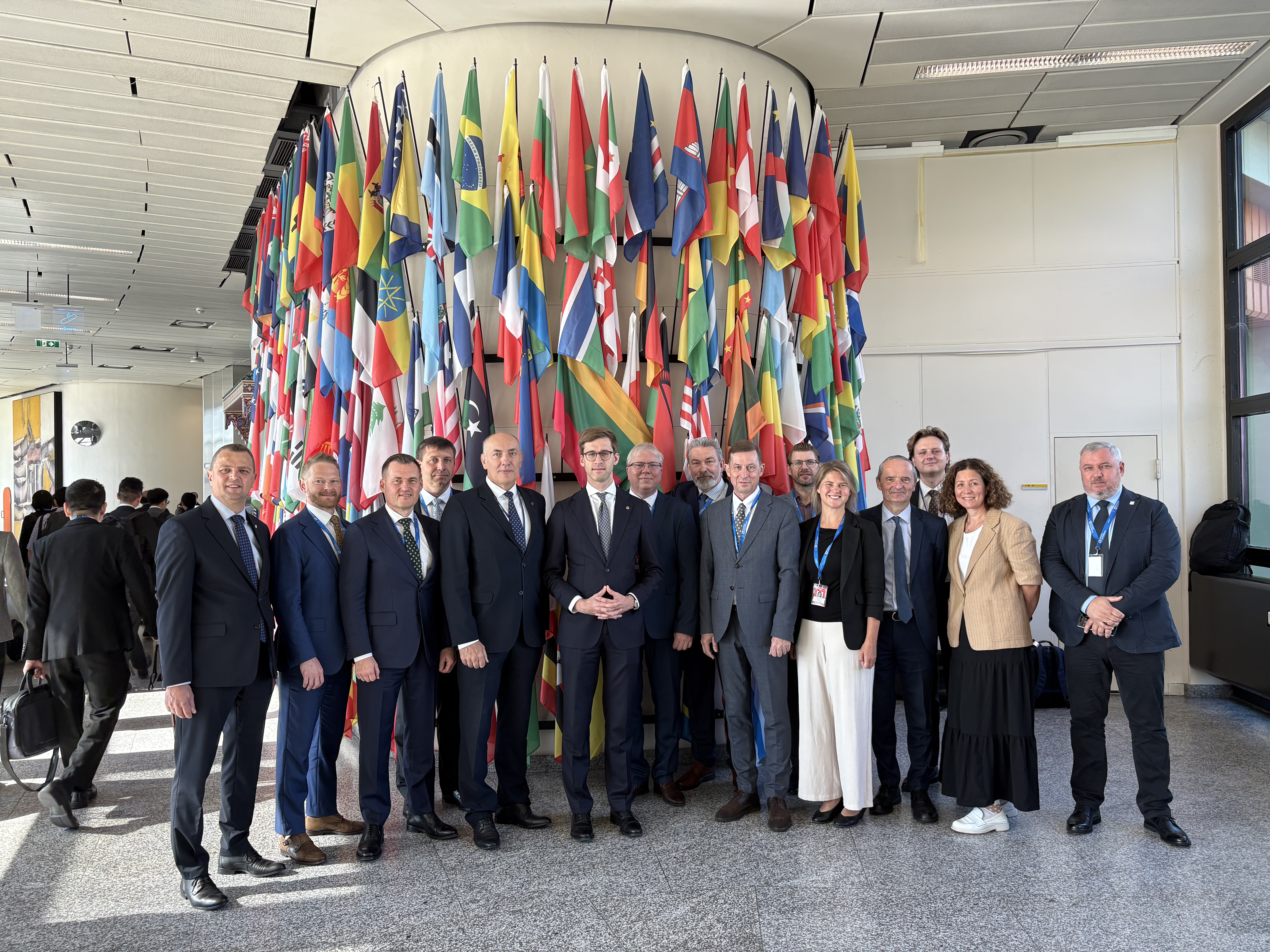
The Lithuanian Delegation at the IAEA General Conference
At the 70th Regular Session of the International Atomic Energy Agency (IAEA) General Conference held in Vienna from 14 to 18 September, Lithuania highlighted the need to strengthen nuclear and radiation safety, expressed support for Ukraine, and drew attention to unresolved safety issues at the nuclear power plant in Belarus. Lithuania’s experience in implementing the decommissioning of the Ignalina Nuclear Power Plant (Ignalina NPP) was also presented at the conference.
The Lithuanian delegation was headed by Vice-Minister of Energy Gabriel Gorbačevski, who delivered Lithuania’s national statement at the plenary session of the General Conference. Gorbačevski emphasised Lithuania’s commitment to continuously strengthening nuclear and radiation safety, as well as the IAEA’s role in helping to ensure high international nuclear safety standards.
‘Nuclear safety cannot be confined by national borders. That is why the IAEA’s role in strengthening international safety standards, ensuring continued attention to the safety of Ukraine’s nuclear energy facilities, and addressing ongoing nuclear safety issues in our region is particularly important to Lithuania,’ says Vice-Minister of Energy Gabriel Gorbačevski.
In its national statement, Lithuania once again expressed its strong support for Ukraine and condemned the threat posed by Russia’s war to Ukraine’s nuclear energy facilities. Lithuania also reiterated its concern about unresolved nuclear safety issues at the Astravets Nuclear Power Plant (Astravets NPP), which is located in Belarus near the Lithuanian border.
During the conference, the Lithuanian delegation met with Karine Herviou, IAEA Deputy Director General and Head of the Department of Nuclear Safety and Security. The meeting focused on further cooperation between Lithuania and the IAEA in implementing the Ignalina NPP decommissioning projects, safely managing radioactive waste, and strengthening Lithuania’s emergency preparedness. The parties also discussed opportunities for IAEA expert assistance to Lithuania in assessing the potential deployment of small modular nuclear reactors (SMRs).
During the meeting, considerable attention was given to the situation at Ukraine’s nuclear energy facilities and nuclear safety issues at the Astravets NPP. Lithuania expressed its support for the IAEA experts’ continued work in Ukraine, as well as its readiness to contribute Lithuanian experts to IAEA missions if needed.
Lithuania also drew attention to ongoing safety issues at the Astravets NPP, the lack of information on equipment failures recorded at the plant, and Belarus’s plans to further develop its nuclear energy programme at the same site. It was emphasised that Belarus must address unresolved safety issues at the existing plant, while the safety of new nuclear energy projects must be properly assessed and a cross-border consultation process ensured when planning such projects.
Ignalina NPP decommissioning experience presented
During the General Conference, the progress of the Ignalina NPP decommissioning, the experience gained in implementing this exceptional project, and the work ahead were presented to the international community. The Ignalina NPP decommissioning programme is now approaching one of its most significant and technically complex stages – the dismantling of the cores of the two RBMK-1500 reactors.
‘Lithuania is the first country in the world to dismantle RBMK-type reactors at a decommissioned nuclear power plant – the Ignalina NPP. In implementing this unique project, we are addressing challenges that are unprecedented in global nuclear facility decommissioning practice. The experience and knowledge gained during the decommissioning of the Ignalina Nuclear Power Plant can provide valuable insights to the international nuclear energy community, as the need for nuclear facility decommissioning projects is constantly growing worldwide,’ says Vice-Minister Gorbačevski.
The International Atomic Energy Agency has 182 Member States and promotes the safe, secure and peaceful use of nuclear energy and nuclear technologies worldwide.
Last updated: 23-09-2026