

The Minister of Energy discussed the protection of critical energy infrastructure and the phasing out of russian oil with the Head of the European Commission President’s Cabinet.
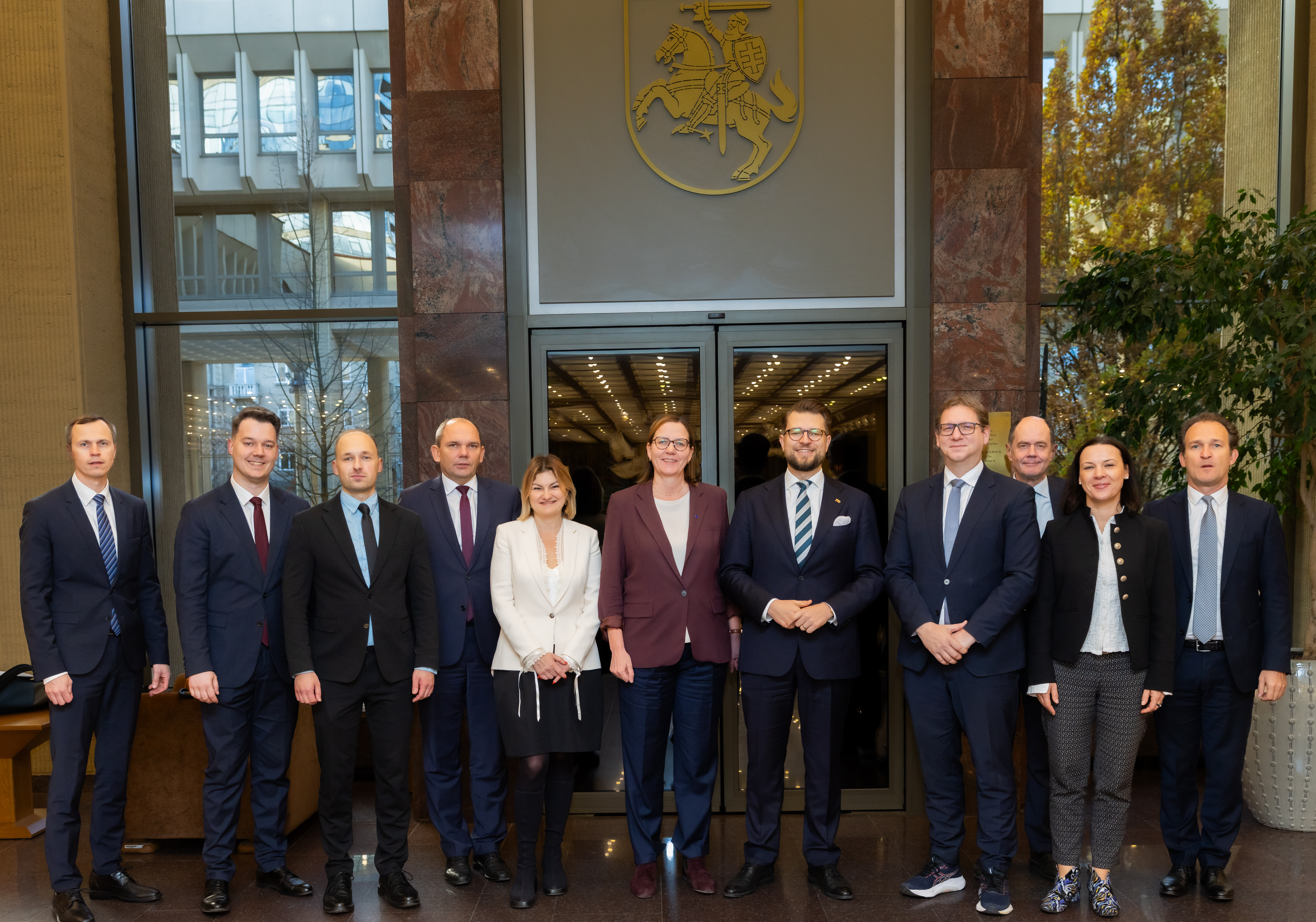
On the 6th of November, Minister of Energy Lukas Savickas met with Björn Seibert, Head of Cabinet to the European Commission President, and Ilze Juhansone, Secretary-General of the Commission, in Vilnius to discuss energy priorities for Lithuania’s upcoming Presidency of the EU Council – including the protection of critical energy infrastructure – as well as EU legislative proposals that the European Commission plans to present during Lithuania’s Presidency.
During its Presidency of the Council of the EU, Lithuania will prioritize the integration of the EU energy market, the security and affordability of energy supplies, and the protection of critical energy infrastructure. In the current dynamic security environment, particular attention will be paid to the protection of critical infrastructure, which must become an integral priority of EU policy, enshrined in EU legislation and supported by adequate funding.
"The infrastructure is European, yet its protection remains a national responsibility for the time being. Lithuania built energy networks and interconnectors with EU support; now, we must invest in protecting this infrastructure. We cannot call for strengthened energy security while simultaneously cutting funding for the Connecting Europe Facility– which is essential for this purpose – in the new EU financial framework. Lithuania’s presidency offers an opportunity to make the protection of critical infrastructure a permanent EU priority," says Minister of Energy Lukas Savickas.
The Minister also urged the Commission to present the anticipated proposal to ban EU member states from importing russian oil, thereby completing the REPowerEU initiative aimed at strengthening Europe’s energy independence. According to the Minister, Lithuania’s presidency presents an important opportunity to adopt this proposal.
"For Lithuania, a complete and irreversible move away from russian oil import to Europe is a matter of security, not merely an energy policy," says Energy Minister Lukas Savickas.
The war in Ukraine and incidents in the Baltic Sea demonstrate that energy infrastructure is increasingly facing physical, cyber, and hybrid threats: more than 30 incidents and attempts to attack infrastructure have been recorded in the Baltic Sea region since 2022.
Lithuania seeks to ensure that the protection of critical energy infrastructure becomes a permanent EU priority – enshrined in legislation, backed by sufficient funding, and reflected in the long-term EU budget. Lithuania is also drafting national legislation to strengthen the resilience of critical energy infrastructure and is investing in counter-drone and surveillance systems, stockpiling, and other measures.
Lithuania looks forward to continuing its close cooperation with the European Commission, both on the Presidency agenda and in strengthening Europe’s energy security, resilience, and energy independence by expanding generation of local clean energy. The Minister believes that this meeting will contribute to closer cooperation in strengthening a common European approach to the protection of critical energy infrastructure.
Last updated: 09-11-2026