

Warsaw Security Forum: protection of critical energy infrastructure is a shared European responsibility
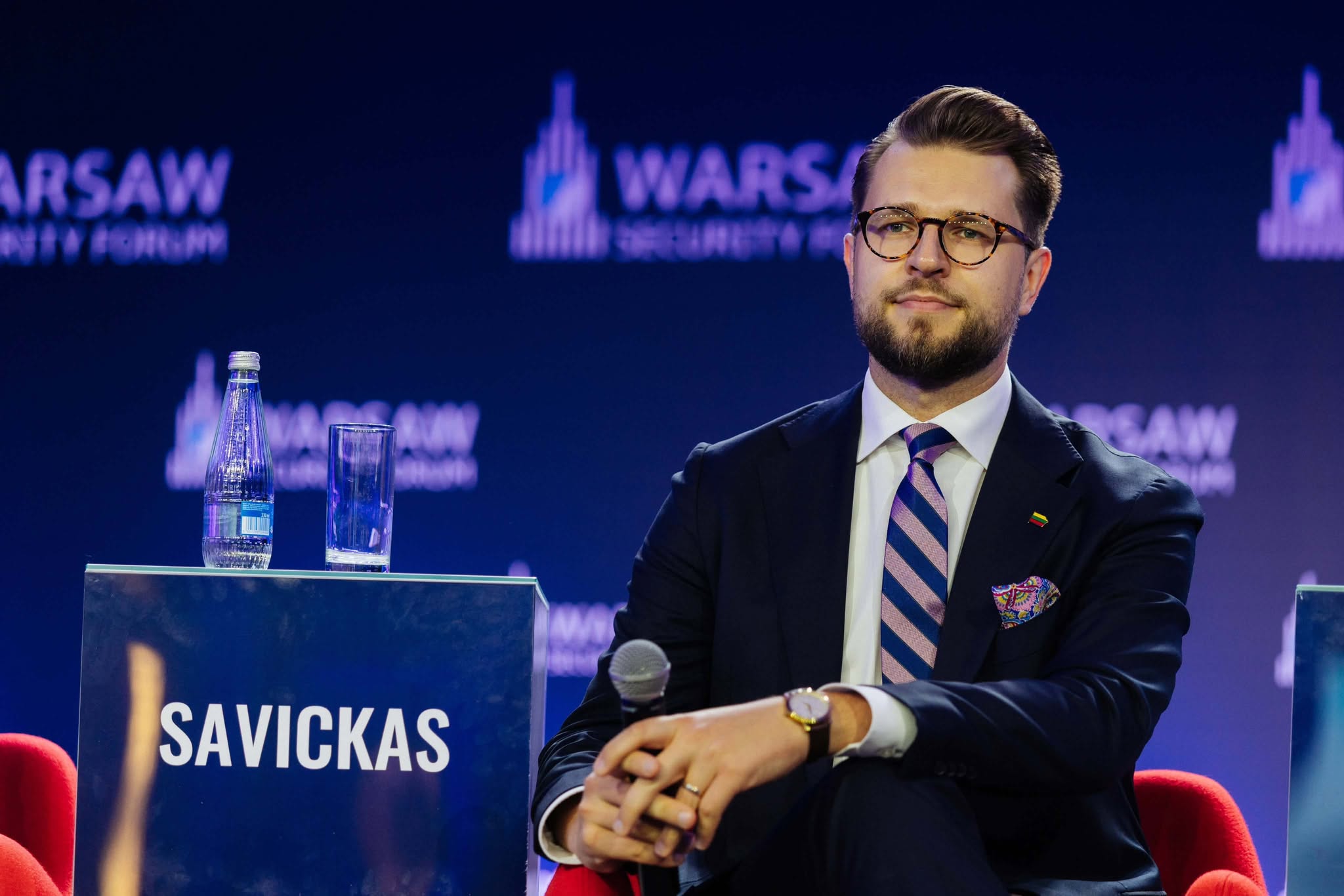
L. Savickas at Warsaw's Security Forum
Nowadays, critical energy infrastructure is not only the basis of the economy but also the centre of modern conflicts, national security and geopolitical stability. Its protection requires close cooperation between states, energy operators and allies. This was emphasised by Lukas Savickas, the Energy Minister, at the international Warsaw Security Forum held in Poland on 12-13 October 2026.
‘The current geopolitical situation demands a special focus on the protection of critical energy infrastructure. We are pleased that the partnership between Lithuania and Poland is closer than ever before, which enhances overall regional security. Last week, the Polish Minister of Energy and I agreed that the 'Harmony Link' will become operational no later than the end of 2030, and that we will work together to strengthen the protection of critical energy infrastructure’, says Minister of Energy Lukas Savickas.
On Monday, a discussion on the forum’s main stage, under the title ‘Powering Europe’s Future: Energy Security from the North to the South’, addressed how Europe, as it moves away from Russian energy, can ensure a reliable and affordable energy supply by strengthening the North-South energy axis. Protection of maritime infrastructure received much attention as well. According to the minister, responsibility for the infrastructure protection must be divided clearly: operators should ensure operational and cyber security, whereas states and armed forces should be responsible for maritime surveillance and countering threats.
The minister also took part in a high-level discussion ‘Keeping the Lights On: Energy Infrastructure on the Frontline of Europe‘s Security’. Drawing on the experience of Ukraine and the region, the discussion addressed the issue of strengthening the resilience of critical energy infrastructure and ensuring the capacity for its rapid recovery, should the need arise.
‘Ukraine has repeatedly restored damaged infrastructure and ensured energy supply for its residents following Russian attacks. This experience demonstrates that resilience is determined not only by protection but also by the ability to recover quickly. By learning from Ukraine and establishing joint reserves of critical equipment together with our neighbours, we are strengthening the resilience of the entire region’s energy system’, says Lukas Savickas.
During the visit, bilateral meetings were held with Sigrun Aasland, Norway’s Minister of Climate and Environment, Stefan Rouenhoff, the Parliamentary State Secretary at the German Federal Ministry for Economic Affairs and Energy, and representatives of the Polish Government.
Last updated: 15-10-2026