

Savickas in Dublin: European Commission proposes a way forward on high energy prices and infrastructure security
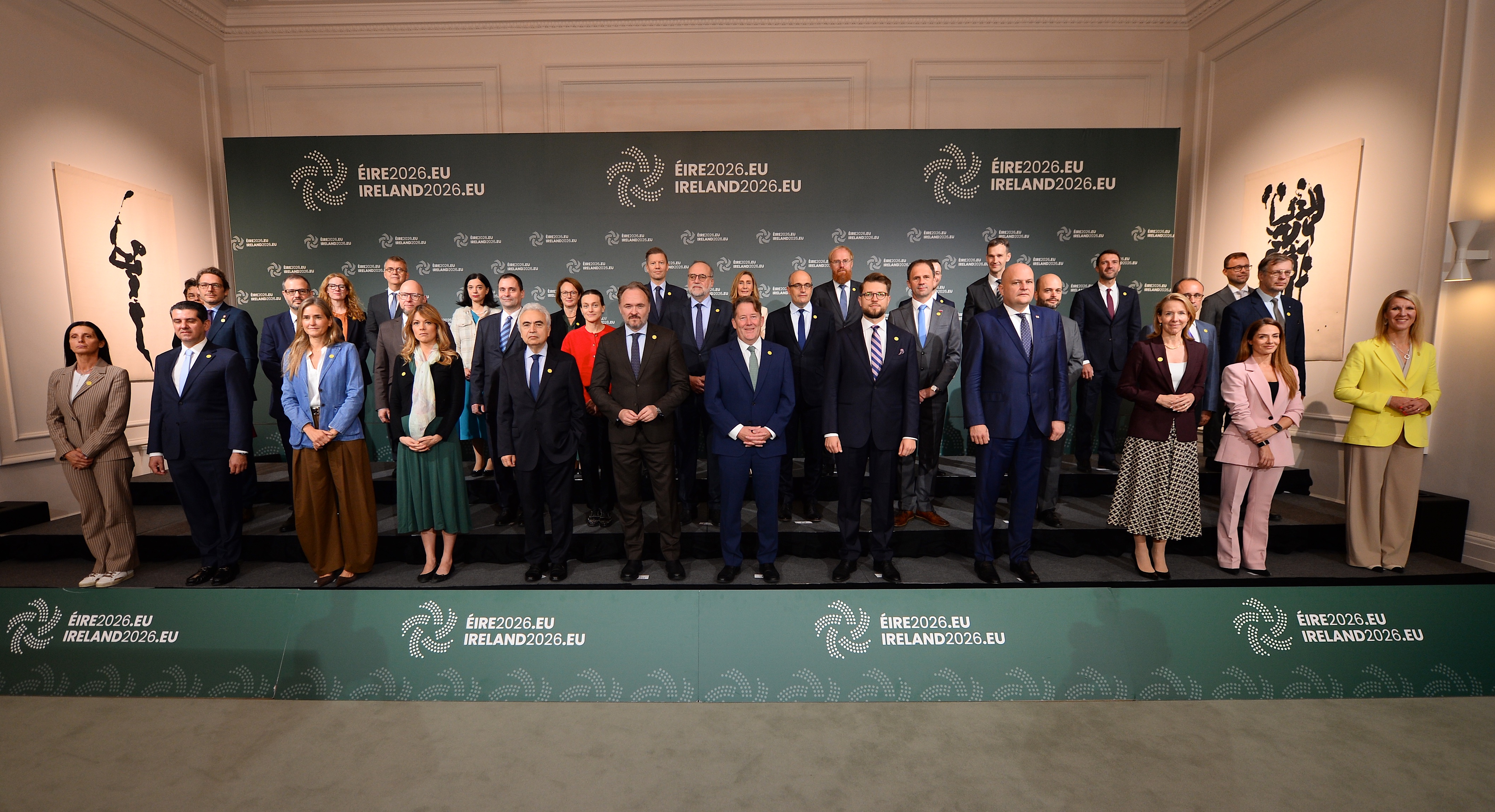
September 29, 2026: Informal EU Ministers' Meeting in Dublin, Ireland
This year, the European Union has already spent more than EUR 100 billion in additional funds on energy resources on energy resources without receiving a single additional molecule of gas or oil in return. The European Commission is therefore urging Member States to make use of an exception allowing them to borrow an additional 0.6 percent of GDP for energy investments.
Thus far, only two Member States have taken advantage of this exception. At the informal meeting of EU energy ministers held in Dublin, European Commissioner for Energy and Housing Dan Jørgensen urged the other Member States to follow suit.
‘We see the borrowing exception proposed by the European Commission for investments in energy security and phasing out fossil fuels as a real opportunity to address the challenges we face. Lithuania, like the rest of Europe, is heading into what will likely be a difficult winter due to rising energy prices, while climate and geopolitical threats are also requiring us to accelerate investment in infrastructure protection and resilience. This exception could therefore be one of the tools to address the challenges ahead,’ says Minister of Energy Lukas Savickas.
On 18 August 2026, the European Commission published guidelines allowing Member States to extend an existing national exemption for defence spending to investments in energy security and the phase-out of fossil fuels. The essence of the exemption is that Member States may be allowed to increase their budget deficit or debt to finance these investments, and such a deviation will not be considered a breach of fiscal rules as long as the established limits are observed.
In addition, an annual limit of up to 0.3 percent of GDP and an overall cap of 0.6 percent of GDP across the entire 2027–2028 period are being introduced for energy security measures. Assuming that Lithuania’s GDP is around EUR 90 billion, additional funding for the energy sector could amount to around EUR 270 million per year (0.3 percent of GDP) or around EUR 540 million over the entire period (0.6 percent of GDP).
Strong focus on energy security
During the informal Council meeting, Minister Savickas emphasised that, as climate and geopolitical threats intensify, protecting energy infrastructure must be one of the EU’s priorities. Protection against physical, hybrid and cyber threats is no longer solely a matter for individual Member States, making greater EU cooperation essential.
‘We have to understand that we must strengthen energy infrastructure security, and this cannot be the responsibility of individual countries alone – greater cooperation at the EU level and adequate financial support for projects are essential. Regional cooperation is also extremely
important – neighbouring countries must be able to help each other restore infrastructure, share specialists and provide each other with the critical equipment needed. We have such an agreement with Latvia and Estonia, but we would encourage other countries to adopt the same approach,’ says Savickas.
According to the minister, it is equally important to increase the resilience of the energy system by decentralising it. In Ukraine, where energy infrastructure is under constant attack, decentralisation has helped ensure electricity supplies in individual regions. In Lithuania, draft legislation is currently being prepared to ensure that the country’s electricity system can operate in a similar island mode, which would allow individual regions to operate independently of the wider system even in the event of large-scale disruptions.
Focus on energy prices
During the informal Council meeting, two of the key issues discussed were energy affordability in the context of the energy crisis, and strengthening Europe’s strategic autonomy.
Lithuania’s position is that energy price crises should be addressed in three stages. In the short term, targeted assistance should be provided to the residents and businesses most affected. In the medium term, support for paying bills should give way to investments that help reduce them – improving energy efficiency and increasing local generation. In the long term, investment should focus on electrification, local renewable energy and electrical grids to reduce dependence on imports and vulnerability to future price spikes.
‘The actions of individual countries are not enough to contain rising energy prices. This requires cooperation among all EU Member States, action by the European Commission, and coordination. We devoted a lot of attention to this in today’s discussions, and it was also one of the key topics of our bilateral meetings with ministers from other countries,’ says Savickas.
While in Dublin, the minister had bilateral meetings with the energy ministers of the Netherlands, Moldova, Cyprus, Spain and other countries. During the meetings, the ministers discussed the priorities of Lithuania’s EU Council Presidency next year and emphasised the importance of international cooperation in protecting existing and newly developed critical energy infrastructure from emerging risks and threats.
At a separate session, ministers shared best practices. Despite russia’s ongoing attacks, Ukraine has been able to restore electricity supplies rapidly, making its experience particularly valuable. As part of efforts to deepen cooperation, Lithuania signed a bilateral declaration with Ukraine’s Ministry of Energy in August. Lithuania’s energy security is also being strengthened by the long-term agreement on LNG supplies signed last week between a Lithuanian and a US company.
This informal meeting was also important from a diplomatic perspective. Ireland currently holds the presidency of the Council of the EU, which Lithuania will take over on 1 January 2027. The issues discussed in Dublin will be important for Lithuania as it prepares for its 2027 EU Council Presidency and shapes its future energy policy priorities.
Last updated: 08-10-2026