

Brussels: Energy priorities for Lithuania’s EU Council Presidency and the need for expedited support for Ukraine
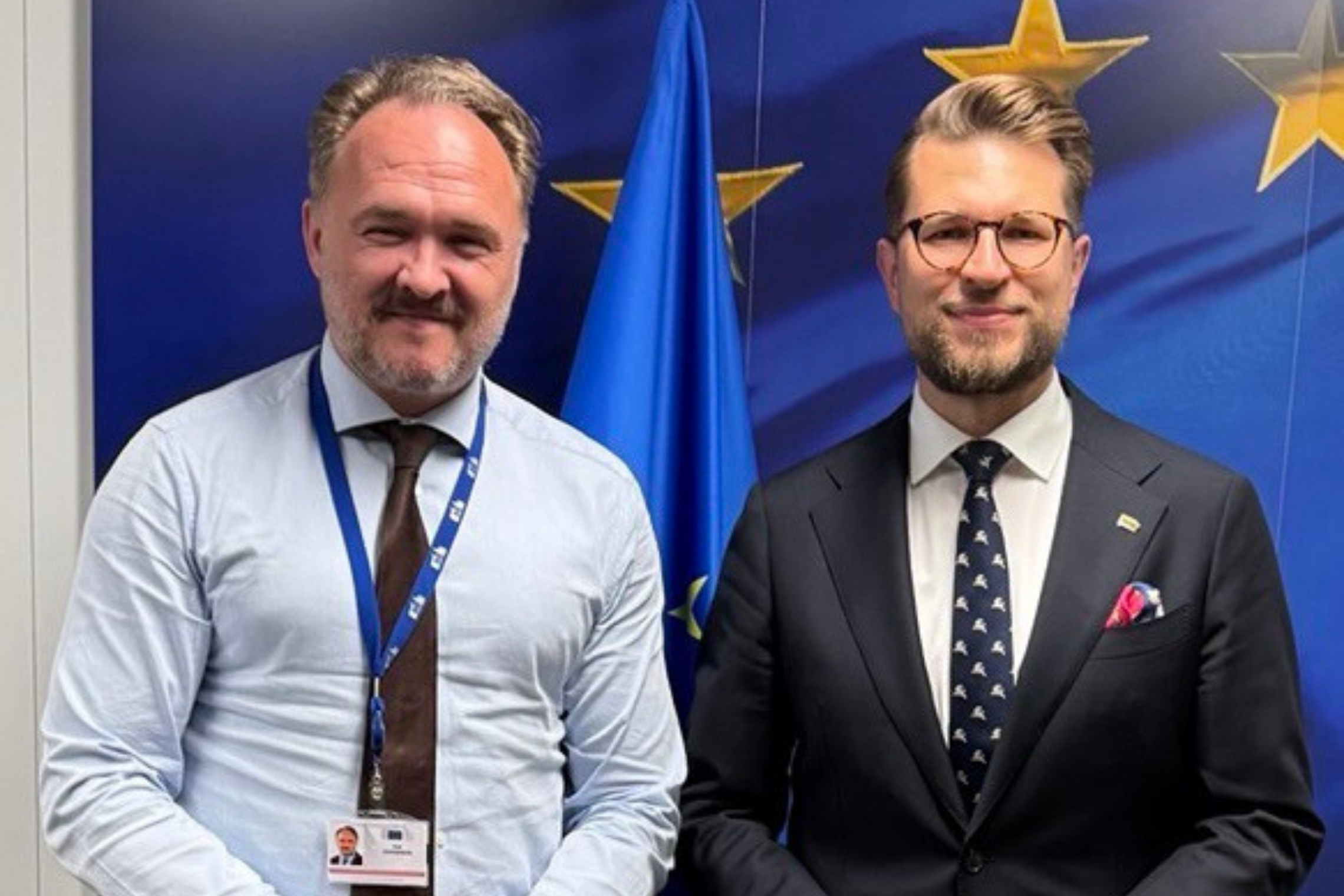
Lukas Savickas ir Danas Jorgensenas
Lithuanian Minister of Energy Lukas Savickas and Vice-Minister Karolina Štelmokaitė have concluded a working visit to Brussels, where they had meetings with European Commissioner for Energy and Housing Dan Jørgensen and Commissioner for Preparedness and Crisis Management Hadja Lahbib. They also met with Pedro Lourtie, Head of Cabinet of the President of the European Council, Members of the European Parliament and Directors-General of the European Commission.
During the meetings, the energy priorities for Lithuania’s EU Council Presidency were presented: the protection and financing of critical energy infrastructure, security of energy supply, including fully ending dependence on russian energy resources, the development of renewable energy, strengthening the EU energy market, and long-term support for the energy sectors in Ukraine and Moldova. Possibilities for expediting the provision of support to Ukraine were also discussed.
‘Lithuania has consistently demonstrated leadership in the areas of energy security and infrastructure protection. In Brussels, we discussed the need for EU funding to boost the resilience of our local grids, and we took concrete steps to speed up the logistics of delivering support to Ukraine,’ said Minister of Energy Lukas Savickas.
Main issues discussed
Strategic dialogue on the EU agenda: At the meeting with Head of Cabinet Pedro Lourtie, who is a pivotal figure in shaping the EU’s strategic agenda, the discussions focused on the future EU long-term budget, continued funding for the decommissioning of the Ignalina Nuclear Power Plant, measures to counter russia’s ‘shadow fleet’, reducing dependence on Chinese technologies in the energy sector, and the next steps towards completely ending imports of russian energy resources into the EU.
Expedited assistance to Ukraine: Lithuania is ready to transfer 19 large transformers to help restore the Ukrainian energy infrastructure that russia has destroyed. At the meeting with Commissioner Hadja Lahbib, Minister Savickas emphasised that the current EU procedures for financing the transfer of equipment take too long and are too slow as winter approaches. He therefore proposed shortening the assessment periods and introducing a unified model for financing the dismantling and transportation of equipment.
Tighter deadlines for the ban on russian oil imports: At the meeting with Commissioner Dan Jørgensen, Lithuania called on the European Commission to present a proposal for accelerating the complete phase-out of russian oil imports, emphasising that russia directly finances its war against Ukraine with revenue from oil sales.
Infrastructure resilience and CEF funding: This Regulation defines the EU’s key energy projects and provides for more efficient and faster permitting. Lithuania is therefore striving to ensure that negotiations on the Connecting Europe Facility (CEF) do not result in reduced funding for energy from the facility or limit opportunities to implement strategic projects. Lithuania also supports the inclusion of a separate funding line in the TEN-E Regulation for the protection of critical energy infrastructure.
Lithuania’s leadership in the energy transition: Lithuania’s progress was presented to European Commission representatives – the combined capacity of solar and wind power plants has already exceeded 6.4 GW, while according to Eurostat, Lithuania has recorded the largest increase in the share of renewable energy of any EU Member State over the past five years. The aim is for the country to meet all its electricity needs through domestic generation by 2028.
Lithuania’s EU Council Presidency
Lithuania will hold the EU Council Presidency in the first half of 2027. This period will be particularly important as a legislative turning point, with the adoption of key EU energy legislation gaining momentum. Lithuania will have a major responsibility to lead negotiations and reach agreements on key legislation that will significantly shape the EU’s future energy policy.
The Presidency gives Lithuania a unique opportunity to directly shape the EU energy agenda and raise issues of vital importance to the country and the European Union as a whole – energy security, the complete phasing-out of dependence on unreliable energy suppliers, and a faster transition to local, clean energy.