

Baltic energy development priorities and regional cooperation highlighted in Riga
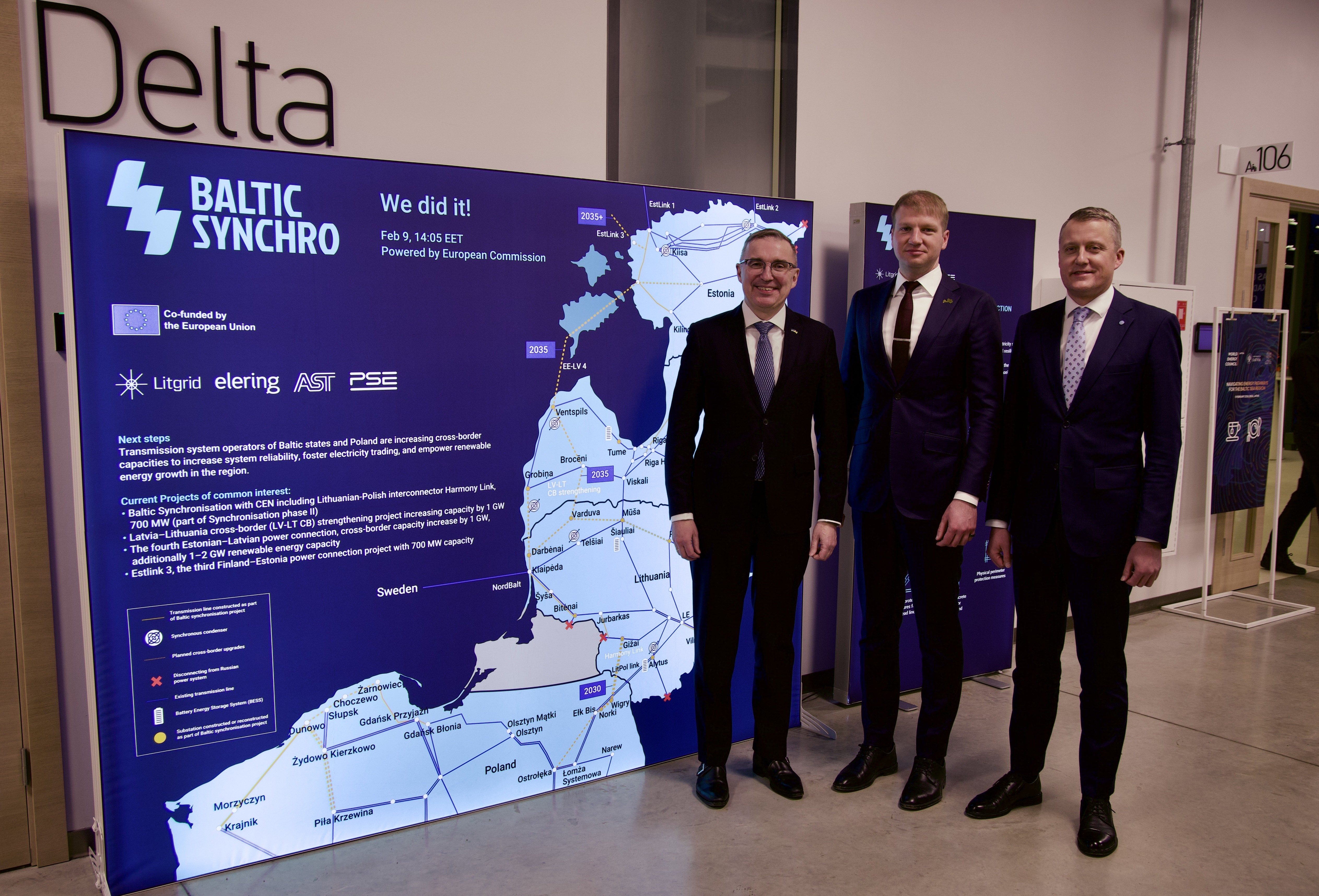
On 11 February, Minister of Energy Žygimantas Vaičiūnas was in Riga to attend the World Energy Council’s “Navigating Energy Pathways for the Baltic Sea Region” conference, where the main focus was on the Baltic Sea Region’s energy sector.
During the conference, Minister Vaičiūnas outlined Lithuania’s energy-sector priorities and objectives, as well as specific directions for the development of renewable energy and electricity storage systems in Lithuania.
“Lithuania is steadily strengthening its energy independence. We have committed ourselves to the ambitious goal of increasing renewable energy capacity to 8 GW and meeting all domestic electricity needs from renewable energy by 2028. We have already surpassed the 6 GW mark, and the pace of development shows that we are moving in the right direction. To ensure that this breakthrough brings maximum benefit to consumers, we must accelerate the transformation of the energy system, investing in cross‑border interconnections, energy storage and system flexibility. These are essential conditions for ensuring stable electricity prices, system resilience and long-term competitiveness,” said Minister Vaičiūnas.
During the panel discussion titled “The Way Forward – What Next?”, Mr Vaičiūnas joined Latvia’s Minister for Climate and Energy Kaspars Melnis and Estonia’s Minister of Energy and the Environment Andres Sutt to discuss the Baltic States’ energy policy priorities for the coming years. At the centre of the discussions were the protection of critical energy infrastructure, the development of renewable energy, and the coordination of strategic projects of regional importance.
“The Baltic States cooperate very closely in the energy sector – we are strong partners, jointly implementing historic and strategic energy projects of regional importance. Today, our shared goal is to build a secure and resilient energy system based on renewable energy sources. In the years ahead, the main focus will be on strengthening the protection of critical energy infrastructure and enhancing system resilience,” the minister stressed.
During the visit to Riga, the Lithuanian, Latvian and Estonian energy ministers signed the Joint Statement on Cooperation in Energy Strategy Coordination. This document seeks to strengthen cooperation and regular information exchange between the Baltic States as they align their long‑term energy strategies through 2050, especially in the areas of renewable energy development, energy system integration, infrastructure development and security of supply.
While in Riga, Minister Vaičiūnas also had a bilateral meeting with Catherine Jereza, Assistant Secretary for the U.S. Department of Energy’s Office of Electricity. Their discussion focused on energy security one year into the Baltic States’ synchronisation with the continental European network, the protection of critical energy infrastructure, and potential areas for cooperation with the United States.
The minister emphasised that the protection of critical energy infrastructure has become one of Lithuania’s top priorities. In recent years, the Baltic Sea Region has seen hybrid attacks and a rise in both physical and cyber threats, underscoring the need for sustained investment in infrastructure resilience and modern protection technologies.
“Today, energy security means not only the supply of energy, but also the resilience of infrastructure against physical, cyber and hybrid threats. In this context, we greatly value the fact that, under the European Connecting Europe Facility (CEF), the European Commission has allocated €113 million to the Baltic States and Poland to strengthen the protection and resilience of electricity infrastructure following synchronisation. This is the first time EU funding has been directly dedicated to the protection of critical energy infrastructure in our region. Lithuania is planning significant investments in the protection of critical energy infrastructure, and we therefore see great potential for cooperation with U.S. companies and experts who have extensive experience in this field,” said the Minister of Energy.